
When the REI Co-op Traverse bear canister hit the cabinets this 12 months, it modified the sport for anybody who camps or backpacks in bear country. Conventional bear-resistant food canisters come in several sizes, requiring a number of cans for journeys of assorted distances or forcing you to hold a bigger dimension than you want for a whole journey.
The distinctive modular design of the brand new REI Co-op Traverse bear canister gives two sizes in a single product. Use the smaller 6.75-liter configuration for shorter journeys or mix two sections for the complete 11.25-liter dimension—appropriate for multiday journeys. As your meals provide decreases, nest one part of the canister into the opposite to unlock pack area.
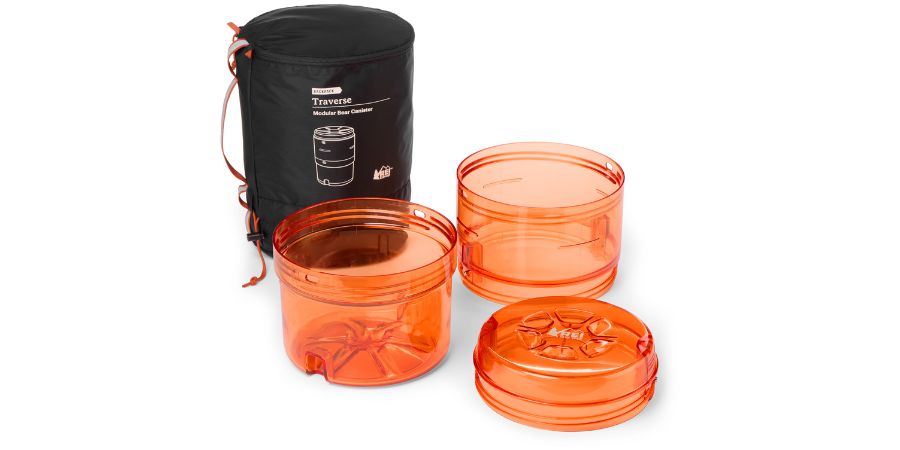
The canister is product of sturdy, bear-tested polycarbonate that’s translucent, so clients can simply see their meals. And its shiny orange colour makes it simpler to identify even at midnight. (Bears odor meals lengthy earlier than they see it.)
“We targeted on making this new canister design as intuitive and as straightforward because it presumably could possibly be,” says Nate Bullock, a senior product designer at REI.
Bear examined, human authorized
REI Co-op designers thought out—and examined—each function of the can to make sure that bears stayed out whereas backpackers may simply get in.
“We did two completely different sorts of analysis methodologies for the bear canister,” explains Bryan Jackler, REI product researcher. One check concerned folks. The opposite one concerned bears.
Preliminary testing with folks centered on ease of use and performance of the modular system. The crew used prototypes that they created with a 3D printer. “The canister was the primary massive product we ever printed on a 1-to-1 scale,” explains Devin Paschke, supervisor of engineering and product growth for REI and the mind behind the bear canister.
The crew despatched these prototypes into the sphere with testers—although not in bear territory—and used the suggestions to make enhancements. After a number of 3D-printed prototypes and extra testing, they created a sturdy polycarbonate canister prepared for the most important problem but: stay grizzly bears.
Spherical No. 1
Early one morning in September 2023, Paschke, Bullock and Dave Gardner, REI senior check engineer, drove to the Washington State University Bear Center in Pullman to get their product licensed. The Bear Middle and its resident grizzly bears recurrently check gadgets like coolers, dumpsters and rubbish cans for bearproofing effectiveness.
To be licensed bear-resistant by the Interagency Grizzly Bear Committee (IGBC), a product should stand up to a minimum of one hour of energetic bear interplay with out the animals gaining entry. Rolling or dragging the canister doesn’t rely as energetic time, says Gardner. Biting, clawing, throwing and different maneuvers, nevertheless, do.
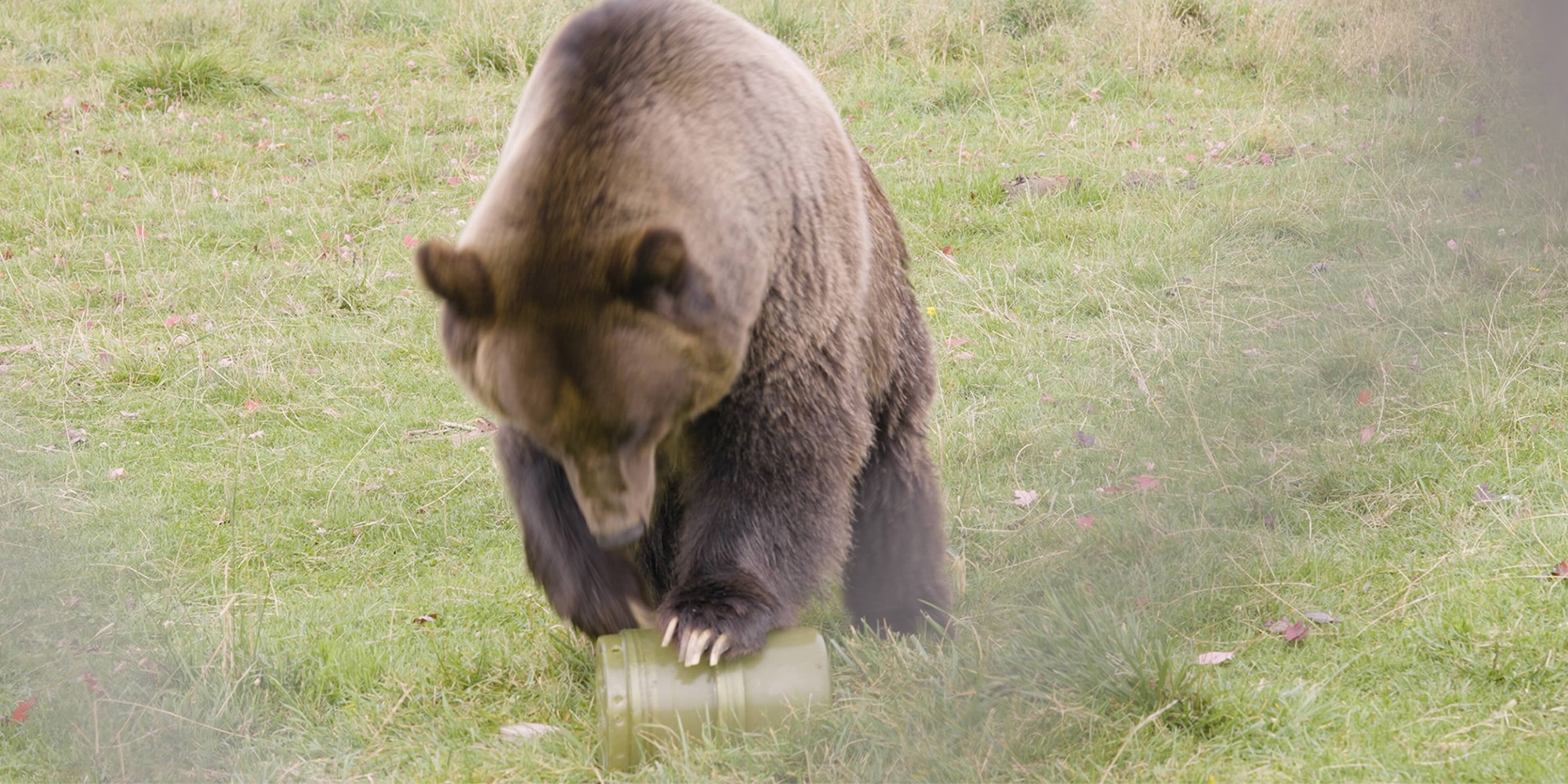
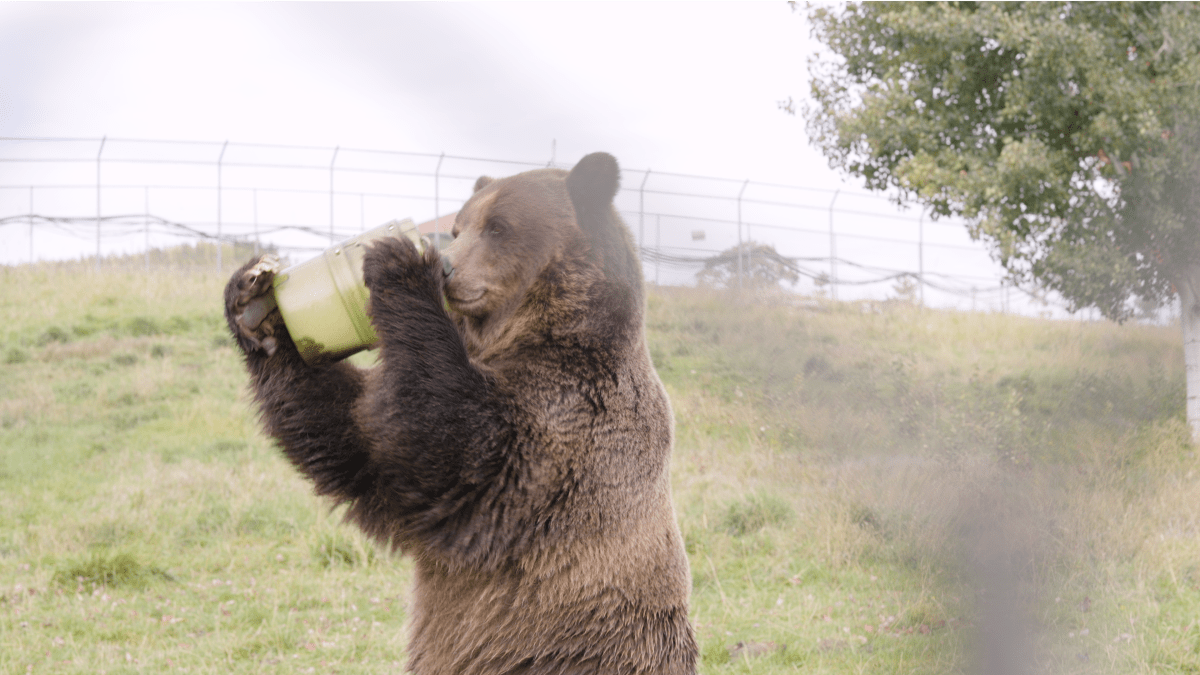
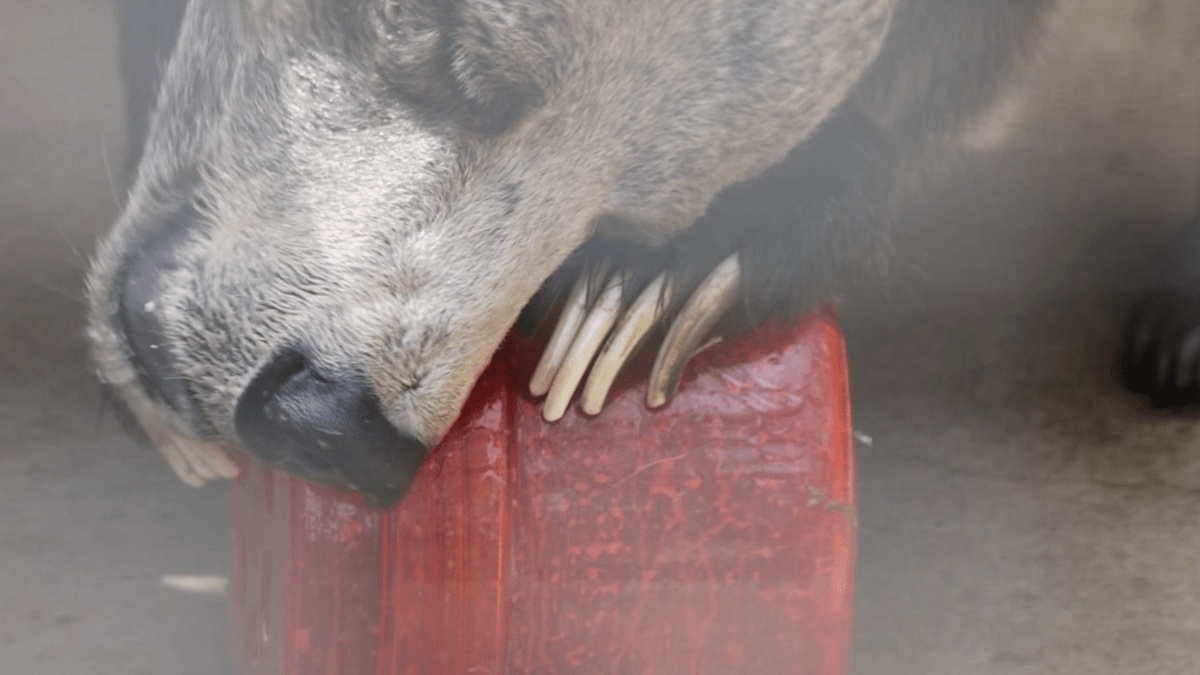
The grizzlies had been launched right into a pen space with a canister stuffed with temptations like donuts, honey, kibble and Twinkies. “They took the canister onto the arduous grime, the grassy floor and the concrete and simply beat it up, throwing it towards logs, the partitions, no matter,” says Paschke. “Some used brute muscle. Some used what the Bear Middle calls ‘chest compressions,’ and a few had been biters, utilizing their tooth.”
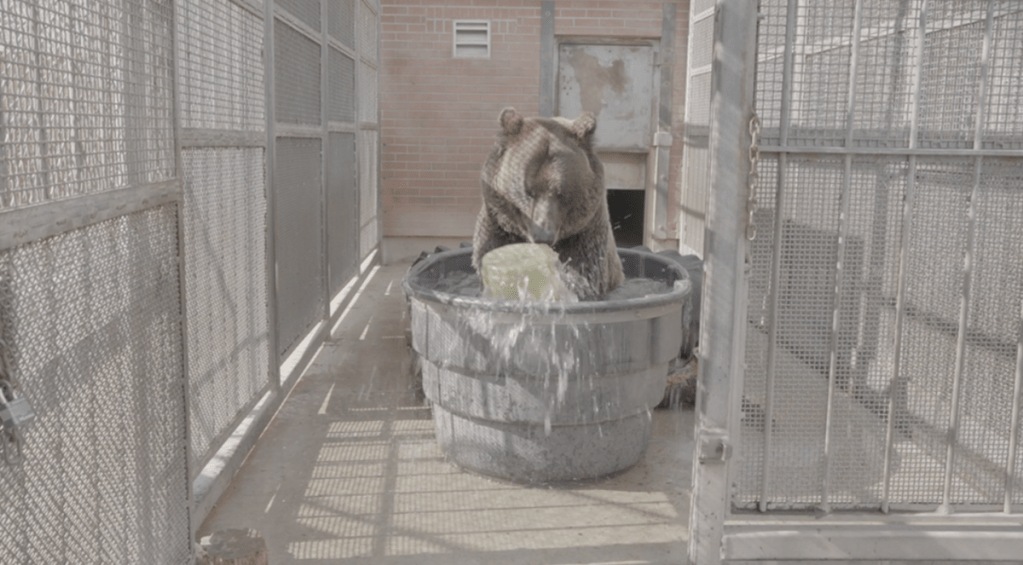
One bear submerged the canister in a trough of water. That prompted honey to seep out, Bullock says, however probably additionally added weight to create a good greater affect when thrown.
One other bear took the canister into its den, a roughly 10×10 cinderblock room. She stood on hind legs and threw it into the wall so arduous it bounced off and hit one other.
“It didn’t break. It didn’t crack,” says Gardner. “That was a extremely cool factor to see. Simply a kind of issues the place you understand how highly effective these animals are.”
Again to the drafting board
After analyzing the injury from that check, the co-op crew refined the design. The bears had been capable of get a superb deal with on the lid with their tooth, Gardner says. So, the crew targeted on modifying the lid in addition to the thickness of the fabric.
Again within the lab in Seattle, they even created a metallic probe to imitate the scale and form of a bear tooth to measure the drive to puncture the can.
In addition they adjusted the can’s colour from inexperienced to shiny orange after noticing how a lot the canister blended into the grass in the course of the first bear checks, Bullock says.
In June 2024, the co-op crew returned with a stronger prototype for a second trial run. Due to the modular design, each the smaller configuration and the bigger dimension needed to be individually examined.
This time, the canister gained.
Even Kio, the bear who bit into the canister the primary time round, couldn’t defeat this model.
“I bear in mind watching the clock with seconds ticking by,” says Bullock, as a wave of reduction poured over him. “I used to be considering, ‘Hallelujah!”
Extra suggestions
That wasn’t the top of testing, although.
The product testing crew despatched the bear-approved canister out with professional backpackers on day and in a single day journeys. After practically 30 trials, the backpackers evaluated it in a variety of temperatures and climates.
“Individuals actually beloved how the can was modular,” says Jackler. “It is a little little bit of a sport changer, one thing that they hadn’t seen earlier than.” Some folks felt the canister was barely heavy however although the modularity was value that additional little bit of weight, he provides.
Testers preferred the high-visibility colour. “That orange actually stands out,” says Jackler.
How the two-in-one modular design works
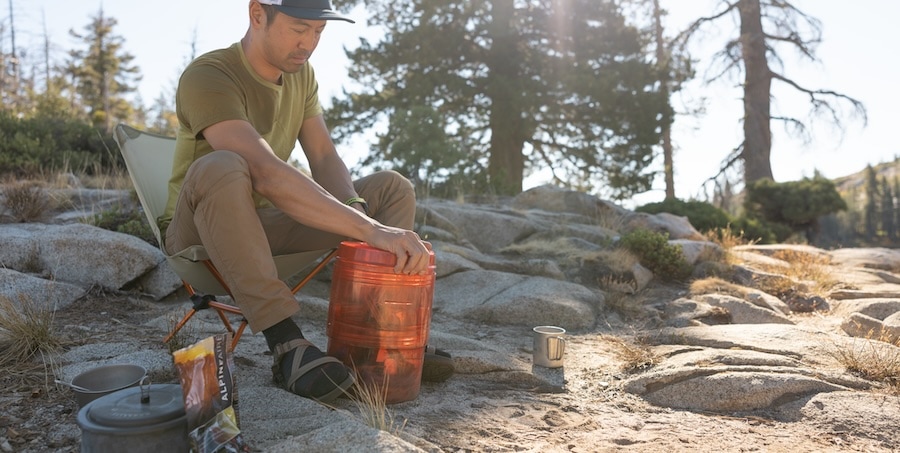
The 2-in-one bear canister consists of three fundamental items that work collectively in a modular design for various food storage wants. The threaded lid screws onto the center piece when utilizing the canister in its massive dimension. Or screw it onto the underside piece when utilizing the canister in its smaller configuration. Within the smaller dimension, the center piece stacks seamlessly outdoors of the underside part. The system nests neatly—and conveniently—collectively.
The user-friendly design incorporates two metallic push buttons which are straightforward to function with out instruments. To open the canister, press down on button No. 1 and twist the lid till it stops. Then press the tab marked No. 2 and proceed unscrewing the lid to open. (Make sure you watch the video for recommendations on the right way to open it.)
The purpose was to make it as comfy and simple to make use of as attainable for a variety of customers, together with folks with smaller palms or these carrying gloves, says Bullock, who guided the usability and aesthetic design points of the canister. “We deliberately included clear directions and visible cues on each the product itself and the stow sack, understanding that the canister’s distinctive modular design could be unfamiliar to many customers,” says Bullock.
The included carry bag options printed directions to open, shut and convert the canister between sizes. The carry bag’s dimension may be adjusted too. It’s reflective for visibility underneath a flashlight or headlamp. Lash loops make it straightforward to connect on the surface of a backpack, to the webbing on a raft or through carabiner and strap in a kayak.
Watch the video
___
Learn extra tales Behind the Designs of our favourite merchandise.
The submit Humans Designed the New REI Co-op Bear Canister. Bears Tested It. appeared first on Uncommon Path – An REI Co-op Publication.